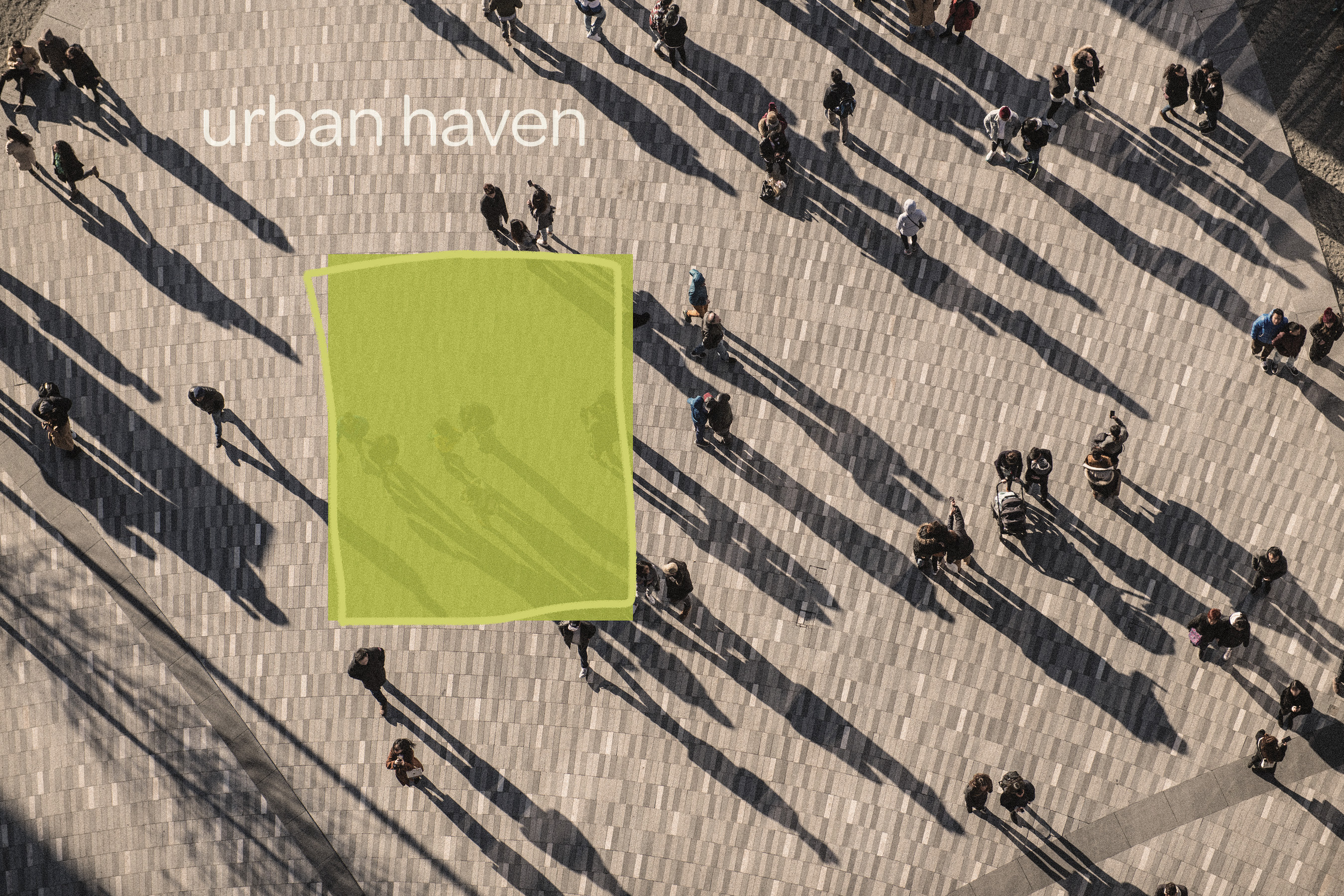
People and long shadows in a paved public square, with a lime-green Urban Haven site marker.

01 — Experience design / Visual identity / Social campaign

Urban
Haven

A community park where seniors, kids, and neighbors share in the care of animals and green space.

Boston, MA2026Independent senior capstone
Scroll to explore ↓

Urban neighborhoods are filled with spaces that are underused and disconnected from the communities around them.

Urban Haven asks how green space can prioritize human experience while breaking down architectural and social barriers. Inspired by an urban farm in Copenhagen that served as a playground and community space for families and elders, I researched sites around Boston.

The selected site sits beside Morville House, an affordable housing complex for elderly and disabled residents in the Fenway neighborhood. Because older adults often rely more heavily on their immediate surroundings, this local context becomes essential to quality of life. The park creates an opportunity for older adults, children, students, and neighbors to share one welcoming space.
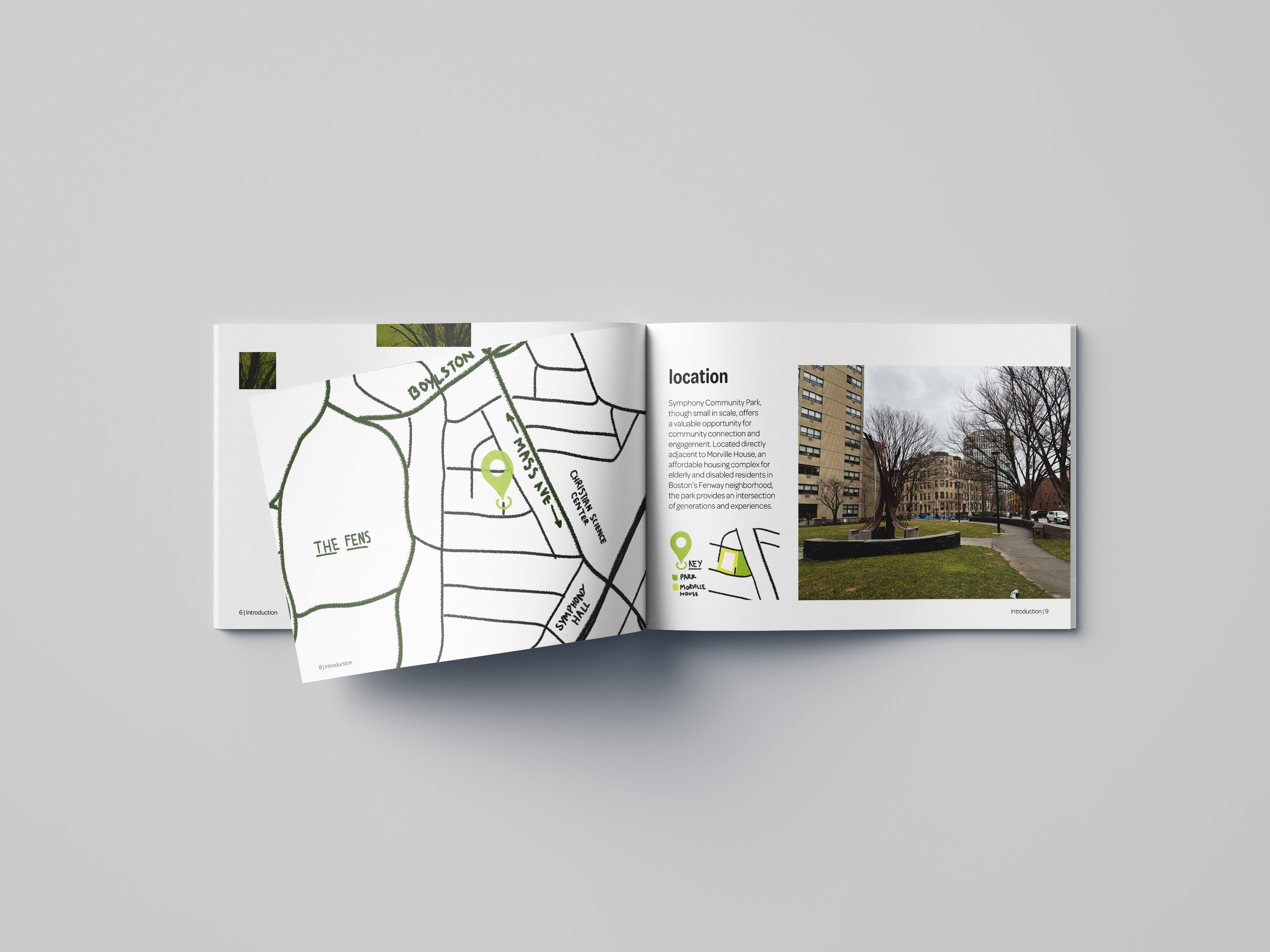
Urban Haven location and site research spread.Researching a site between senior living, college housing, and neighborhood life.

Green space as shared community infrastructure.

01 / Older adults

A nearby, low-pressure place to spend time outdoors, observe the animals, and connect with familiar faces.

02 / Children

An environment for play, curiosity, and learning through direct contact with the living world.

03 / Neighbors + students

A shared responsibility that invites participation, volunteering, and everyday encounters across generations.

Urban Haven is a community park where seniors, kids, and neighbors share in the care of animals and green space.

Sustained by local volunteers and community, it is designed to combat senior isolation and enrich quality of life.

Grow. Gather. Tend.

A visual language rooted in the site itself.

Hand-drawn forms, a garden-green palette, and a flexible wordmark create a system that feels rooted without becoming precious. The work moved through many voices before landing on one that could stretch from animal signage and posters to the booklet that introduces the space.

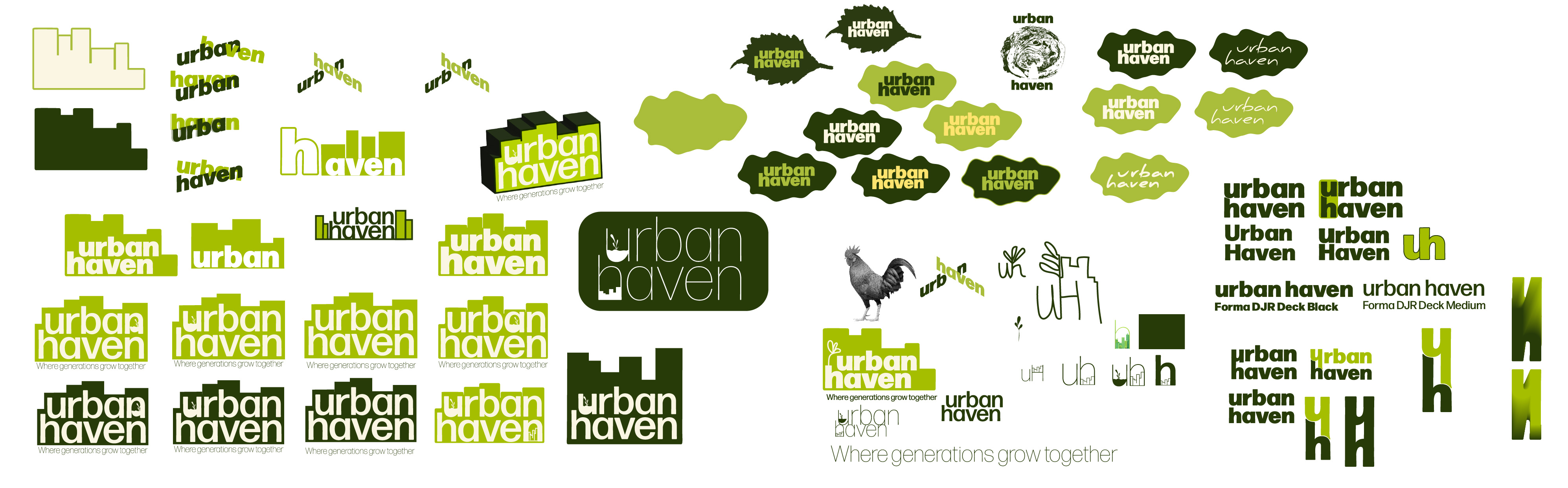
A wide sheet of Urban Haven logo ideas and identity explorations.
Logo explorations
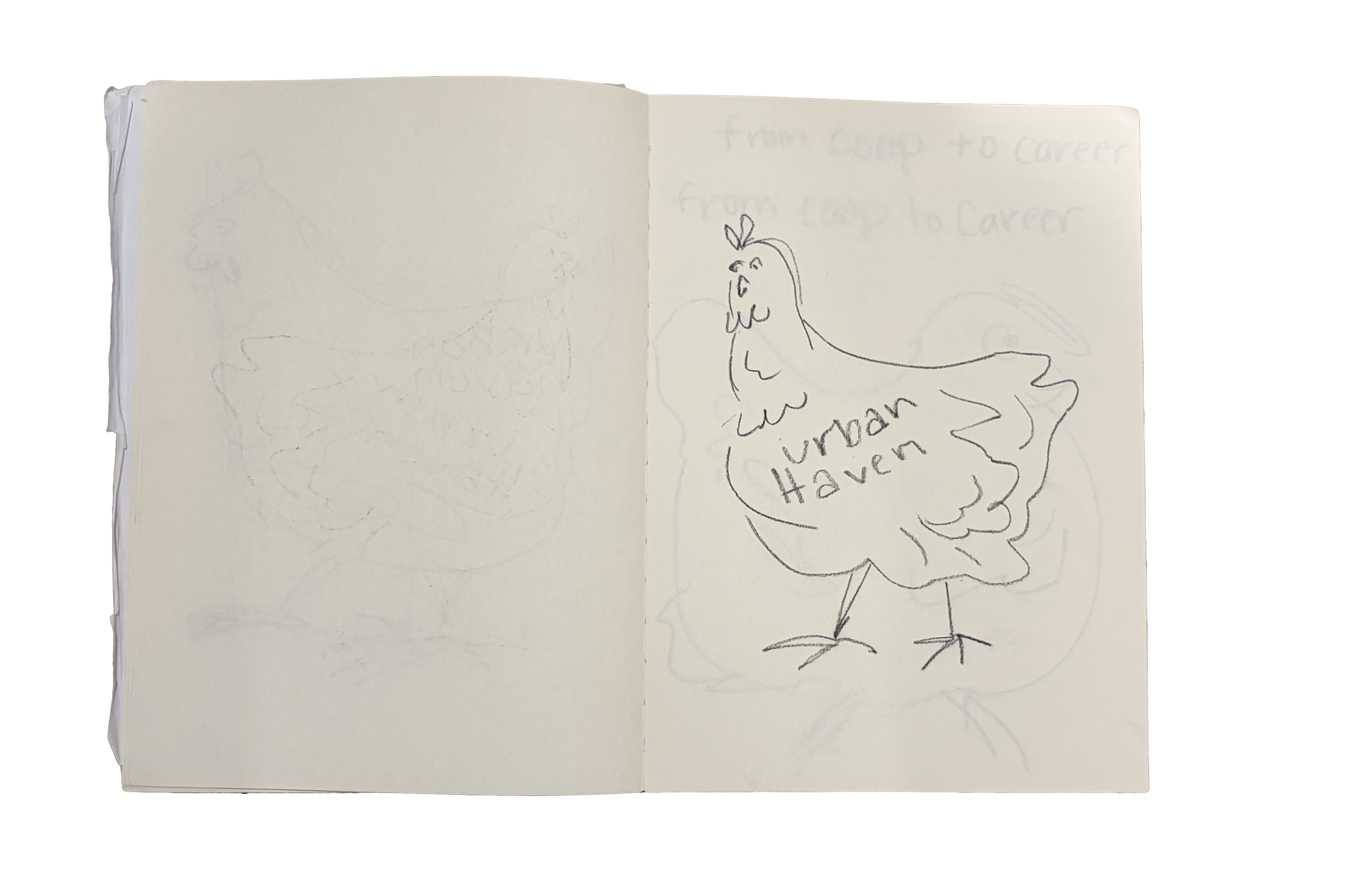
Sketchbook drawing of the chicken illustration and early Urban Haven lettering.
Drawing the mark
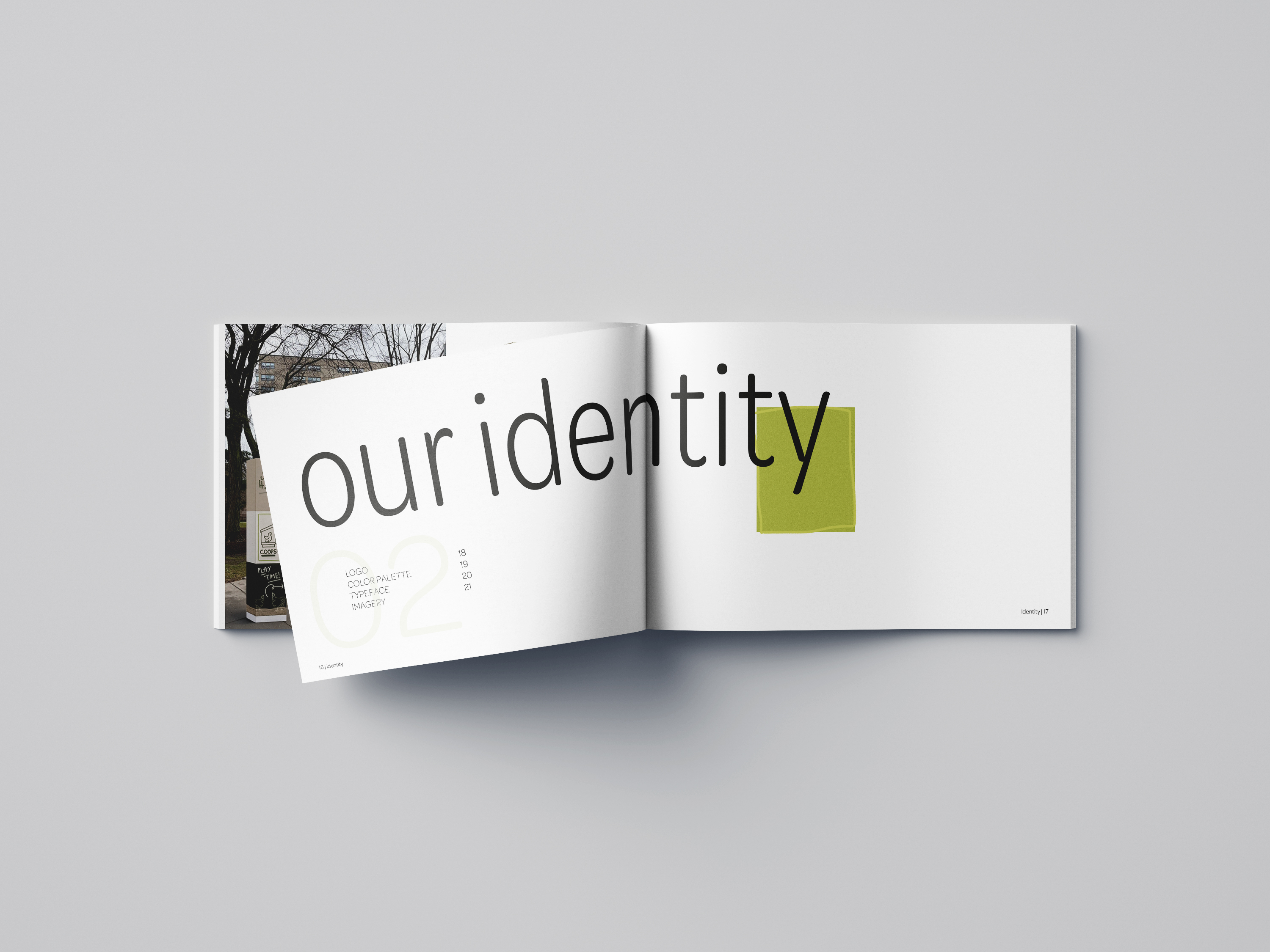
Urban Haven identity system shown in a booklet spread.
The final system

Logo, color, type, and imagery.

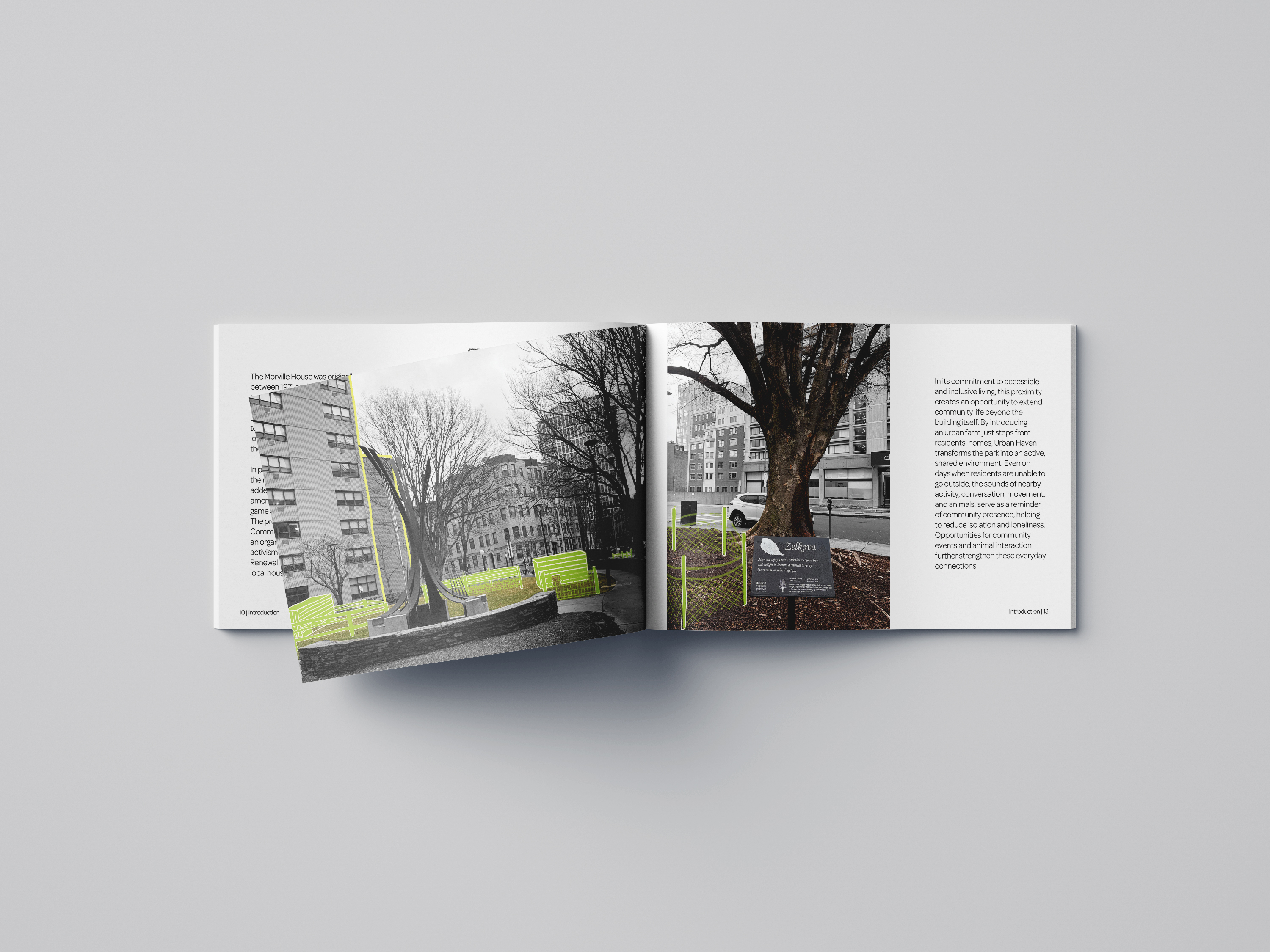
Urban Haven site drawings showing Morville House, trees, seating, and animal areas.
05 / Drawing the space

Site drawings connect the identity to the lived experience of the park: places to pause, look, move through, and care for one another.

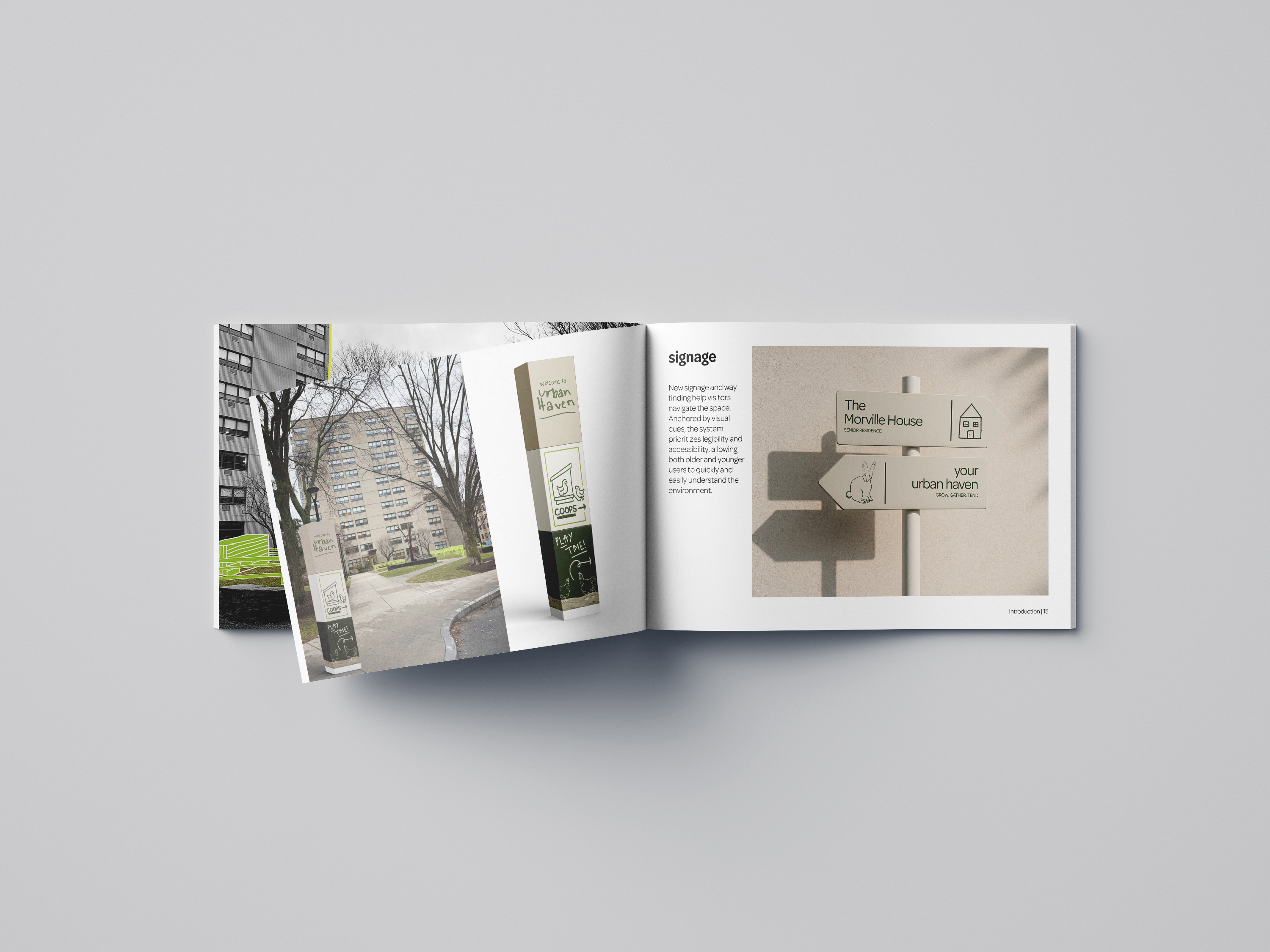
Urban Haven signage and wayfinding system beside Morville House.Wayfinding designed for both older and younger visitors.

A field guide for a future neighbor.

The booklet brings the idea into focus: what the space is, who it welcomes, how people might use it, and why shared environments matter. It became both a brand artifact and an invitation to imagine the space together.

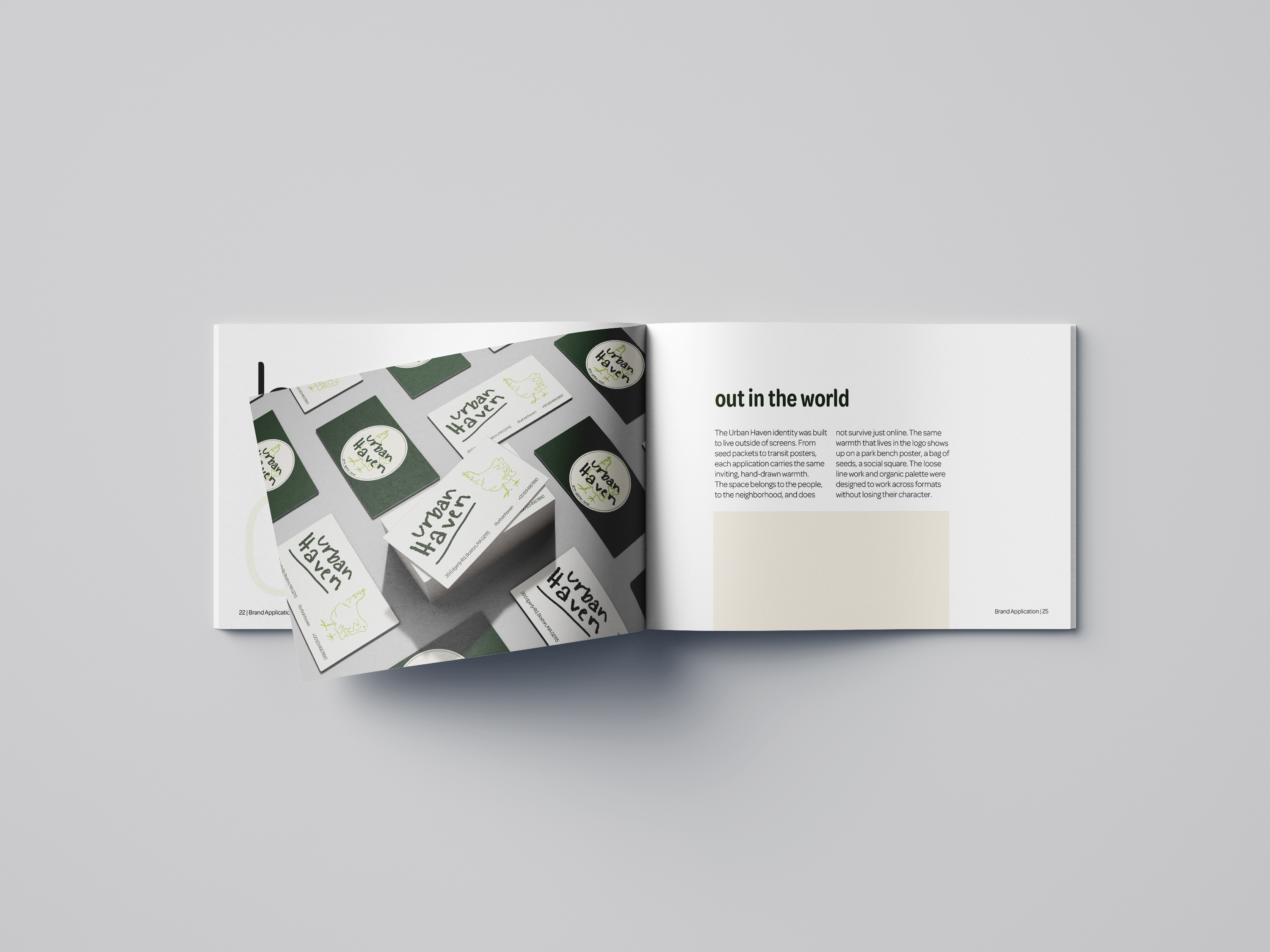
Urban Haven brand applications shown in a booklet spread.

The identity extends from printed matter into the everyday life of the neighborhood.

Cities are full of hidden possibilities. With green space, friendly animals, and thoughtful design, any corner can become a place to pause, connect, and care.

Research · site analysis · experience design · visual identity · campaign · booklet design